
Sustainability in the automotive industry: The role of local dealerships in driving change
The automotive industry is undergoing a significant transformation, and sustainability is at the forefront of it. As concerns about climate change, resource depletion, and environmental impact grow, automakers and dealerships alike are being called upon to take action. While global corporations are implementing wide-scale strategies, the role of local dealerships play a crucial role in influencing consumer behavior, adopting green technologies, and contributing to broader goals set by manufacturers.
Why sustainability matters for dealerships
At first glance, sustainability might seem more relevant to automakers than dealerships. After all, manufacturers are the ones designing and building the cars. However, dealerships are the vital link between manufacturers and consumers. Local dealerships have direct influence over what customers buy, how they maintain their vehicles, and the types of services they seek. In this way, they are positioned to educate customers on green transportation options and to provide the infrastructure necessary to support the growing demand for EVs and hybrid vehicles.
Moreover, sustainability initiatives aren't just good for the environment – they’re good for business. The automotive industry is becoming increasingly competitive, and consumers are more likely to choose brands and businesses that align with their values. Dealerships that prioritize environmental responsibility can differentiate themselves from competitors, attract eco-conscious consumers, and future-proof their businesses against impending regulatory changes
Chuck Hutton Toyota: A Leader in Local Sustainability
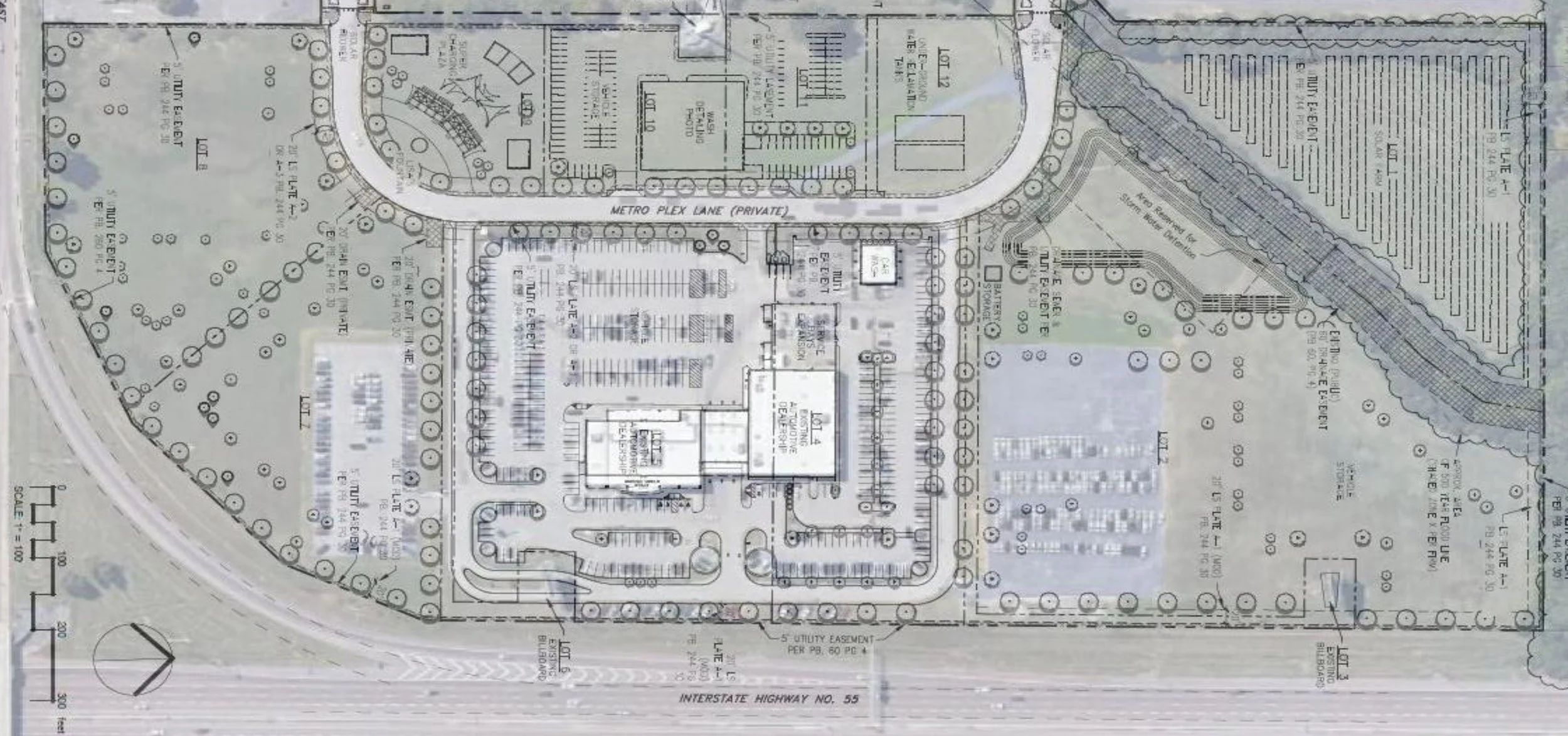
One dealership in Memphis that has embraced sustainability is Chuck Hutton Toyota. Under the leadership of Young Kim of YK Auto Group, it has taken a proactive approach to integrating environmentally friendly practices into its operations, aligning with Toyota’s Environmental Challenge 2050, which sets ambitious goals for reducing CO2 emissions, conserving water, and promoting recycling throughout the entire lifecycle of its vehicles.
One of Chuck Hutton Toyota’s most significant efforts is its investment in renewable energy. In the spring of 2025, it will unveil a state-of-the-art solar energy project, which includes a five-acre solar farm and four Smartflower solar panels on its property. This solar farm, made possible in partnership with Freedom Solar, will supply enough power to meet the dealership’s energy needs and even generate surplus energy that can be fed back into the local grid. The initiative serves as a model for others looking to reduce their carbon footprint.
As the shift towards electric vehicles (EVs) continues to gain momentum, the infrastructure to support EVs must expand as well. Chuck Hutton Toyota has taken the lead in this regard by installing solar-powered ChargePoint Express Plus charging stations equipped with DC fast-charging capabilities. These 350-kilowatt stations provide a practical solution for EV owners and encourage customers to consider EVs as a viable and green transportation option. In doing this, Chuck Hutton Toyota is positioning itself as a leader in the region’s transition to electric mobility.
The role of dealerships
While Chuck Hutton Toyota stands out as a local leader, the dealership is just one example of how businesses in the automotive industry can contribute to sustainability. Dealerships have the unique ability to influence consumer choices by showcasing eco-friendly vehicles, educating customers on the benefits of EVs and hybrids, and promoting green maintenance practices.
One key area where dealerships can make a difference is in the sale and servicing of hybrid and electric vehicles. However, many consumers remain hesitant to switch to EVs due to concerns about range, charging infrastructure, and maintenance. They can address this by providing accurate information, offering test drives, and highlighting the long-term cost savings associated with EV ownership.
As the automotive industry continues to evolve, environmental responsibility will play an increasingly central role in how dealerships operate. Local players like Chuck Hutton Toyota are already leading the way by adopting renewable energy, supporting electric vehicle infrastructure, and promoting sustainable business measures. These efforts help to achieve the broader goals set by automakers and position dealerships as key players in the fight against climate change.
The future of transportation is green, and local dealerships have the power to drive that change. By embracing sustainability, they can enhance their reputations, attract eco-conscious consumers, and contribute to a cleaner, more viable path for the automotive industry and the communities they serve.
